

The equipment listed here is the gear I rely on for Milky Way photography in Cornwall, whether shooting detailed galactic cores, wide-angle coastal nightscapes, or leading astrophotography workshops under dark Cornish skies.
My camera, lens, and accessory have been selected for real-world performance in low-light, long-exposure conditions common to Milky Way astrophotography.
As a Cornwall-based Milky Way photographer, I regularly photograph the Milky Way above locations such as rugged coastlines, historic landmarks, and Dark Sky Parks, where accurate tracking, sharp optics, and clean high-ISO performance are essential.
This gear setup supports Milky Way photography, Startrails, and Aurora in Cornwall, ensuring consistent results in challenging night-time environments.
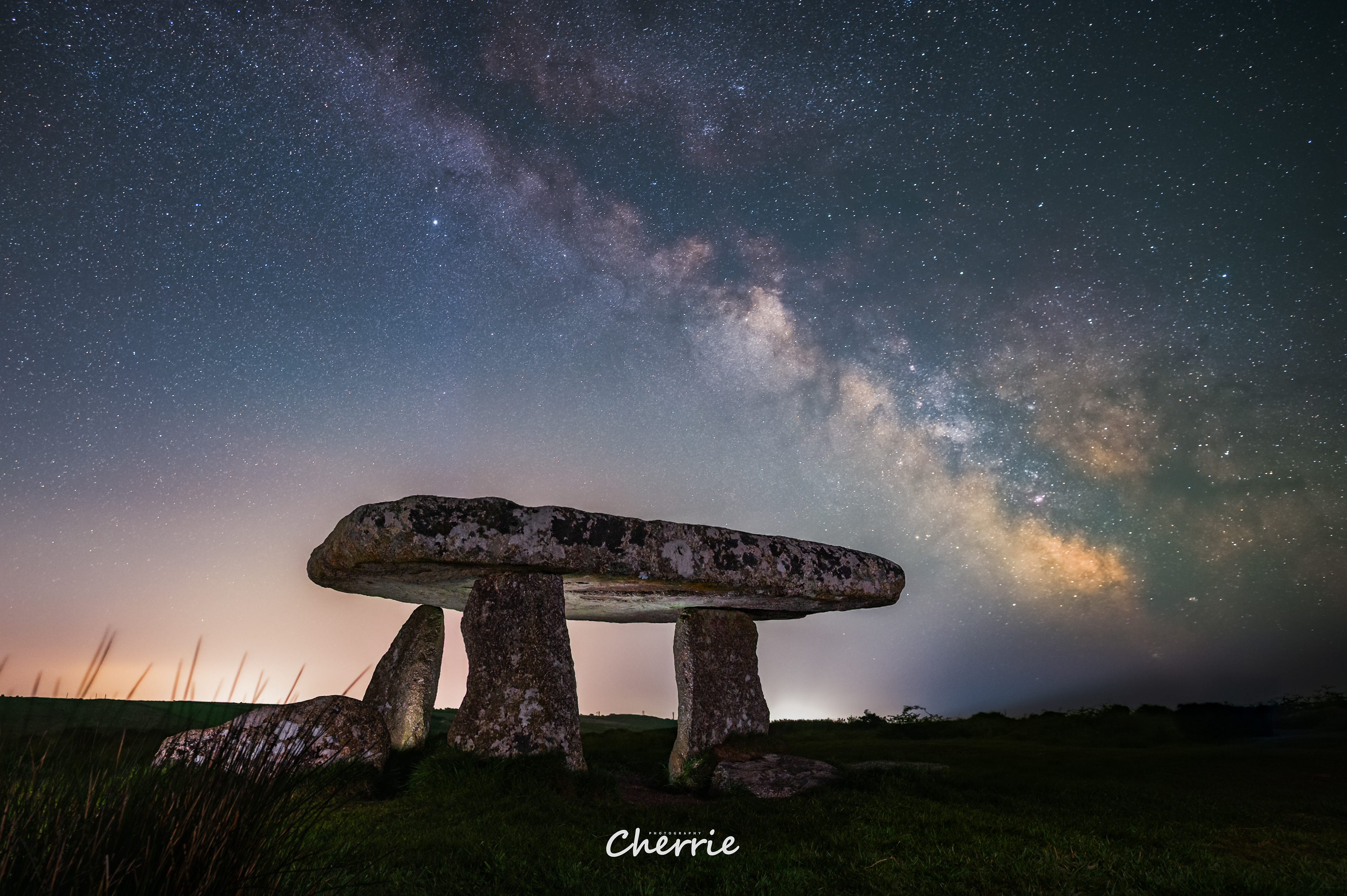
Milky Way photography in Cornwall's Dark Sky Site West Penwith by Cornwall based Astrophotographer Aaron Cherrie
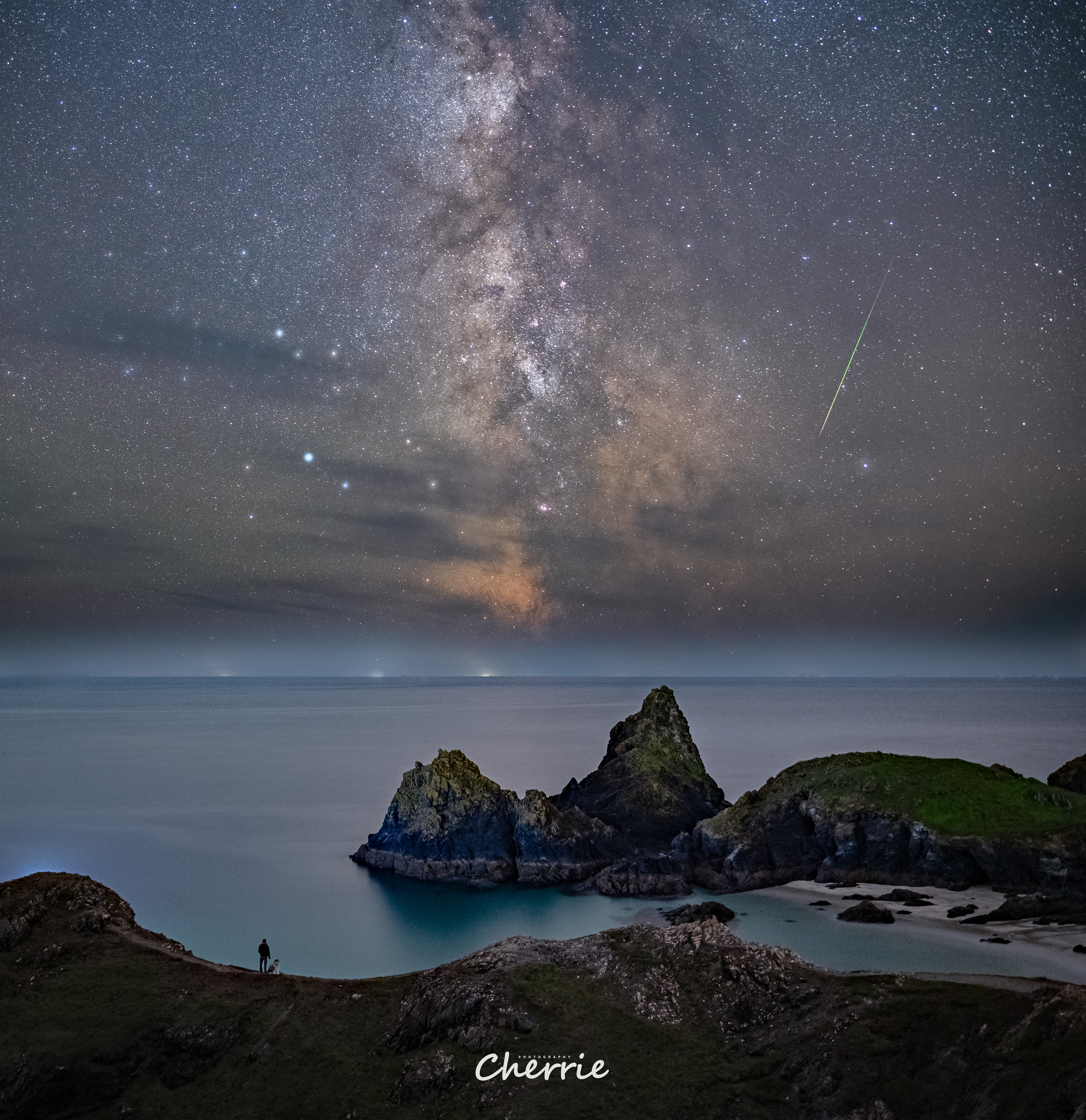
Milky Way photography over the Cornish coast by Cornwall based Astrophotographer Aaron Cherrie
My Astrophotography Cameras
My main camera for astrophotography. The full-frame mirrorless sensor delivers exceptional low-light performance with minimal noise at high ISOs (up to 12,800 usable for Milky Way work). The in-body stabilisation helps with untracked foreground shots, and the robust weather sealing stands up to Cornwall’s coastal dew and occasional drizzle. Paired with the FTZ adapter, it seamlessly uses all my older F-mount lenses.
My trusty backup DSLR — a classic that still holds its own. The 12MP sensor produces beautifully clean files when stacked, and its dynamic range is perfect for blending foregrounds lit by moonlight or subtle light painting. I often keep it as a second body for wide-angle timelapses.
My Lenses for Milky Way Photography
My absolute go-to lens for Milky Way nightscapes in Cornwall. The wide 20mm focal length captures expansive scenes over dramatic foregrounds like Kynance Cove or Bodmin Moor, while f/1.8 gathers plenty of light for sharp, coma-free stars right into the corners. It’s compact, focuses quietly, and performs brilliantly on both the Z6II and D700.
Perfect for slightly tighter compositions or when I want to emphasize foreground elements like ancient standing stones or coastal cliffs. Still fast enough for clean Milky Way shots, and the natural perspective avoids the extreme distortion you sometimes get at 14-15mm.
Not a dedicated astro lens, but invaluable for twilight foregrounds or scouting compositions before the galactic core rises. The constant f/4 aperture and sharp optics make it a reliable daytime-to-night transition lens.
Allows seamless use of my F‑mount lenses on Z‑mount bodies with full autofocus and metering essential for keeping my favourite astro lenses in rotation.
Used primarily for lunar photography and deep-sky objects. With the iOptron tracker, it delivers surprisingly sharp results on brighter targets like the Andromeda Galaxy or Orion Nebula from Cornwall’s darker sites.
Tripods & Mounts for Night Photography
Rock-solid stability is non-negotiable on windy Cornish cliffs. The extra-long Mach3 legs get me high enough for comfortable framing.
allows millimeter-perfect polar alignment for tracked shots essential for noise-free, detailed Milky Way panoramas.
Lightweight option for hikes into remote spots like West Penwith or the Lizard. It’s quick to deploy and surprisingly sturdy for its weight.
Ideal For Wide Field & Milky Way Photography
Star Trackers & Alignment Tools
For Long Exposures Over 30sec
The MSM Nomad is my favourite portable star tracker for astrophotography workshops and field work in Cornwall.
Weighing just 450g, this compact tracker handles camera + lens setups up to 3.5kg, making it ideal for wide-angle Milky Way and nightscape photography. Save 5% With Discount Code CHERRIE5
Re-levels your ball head after polar alignment & Eliminates awkward angles for easier panoramas and foreground shots Giving greater freedom to aim the camera while keeping the weight centered over the tracker. Save 5% With Discount Code CHERRIE5
The MSM Ballhead is the perfect lightweight companion for the Nomad Star Tracker.
Weighing just 230g, this compact and sturdy CNC-machined ballhead is specifically designed to pair with the MSM Nomad. Save 5% With Discount Code CHERRIE5
The MSM 360 Panoramic Base is a fantastic accessory for creating stunning wide-angle Milky Way panoramas and seamless stitched nightscapes. Designed to work perfectly with the Nomad Star Tracker, this lightweight base allows smooth, precise horizontal panning with click stops at every 15° or 30° Save 5% With Discount Code CHERRIE5
The MSM Levelling Base is a simple but highly effective accessory that makes polar alignment with the Nomad Star Tracker significantly faster and more accurate. Save 5% With Discount Code CHERRIE5
Accurate, and capable of carrying the Z6II + 150-600mm. It transforms few second exposures into several-minute tracked exposures, revealing faint nebulae and reducing noise dramatically in post-processing.
Pairs with the Benro tripod for even more precise polar alignment on longer sessions. A small upgrade that makes a big difference when pushing exposure times.
Great addition for quick deep-sky grabs or scouting targets. & sharing live views during workshops giving participants a chance to see nebulae in real time on the app.
Power, Storage & Essentials
A lifesaver on damp Cornish nights. Coastal humidity can fog lenses in minutes the dew heater keeps the front element clear all night without affecting image quality.
Multiple 20,000mAh banks keep everything running through long nights.
fast 128GB/256GB cards handle high-resolution timelapses without buffering.
Lighting & Accessories
My go-to compact torch for night shoots, delivering 450 lumens with a 300m beam for setup illumination or subtle light painting without ruining dark adaptation. The Advanced Focus System switches seamlessly from spot to flood, and IP54 weather resistance handles Cornwall's coastal conditions. Runs 1-25 hours on 4 AAA batteries.
Preserves night vision while setting up or light painting. The dimmable light is bright enough to work by but doesn’t ruin adapted dark vision.
Compact, rechargeable LED panels for subtle light painting on foregrounds. I use warm tones to add depth to rocks or ruins without overpowering the natural Milky Way glow.
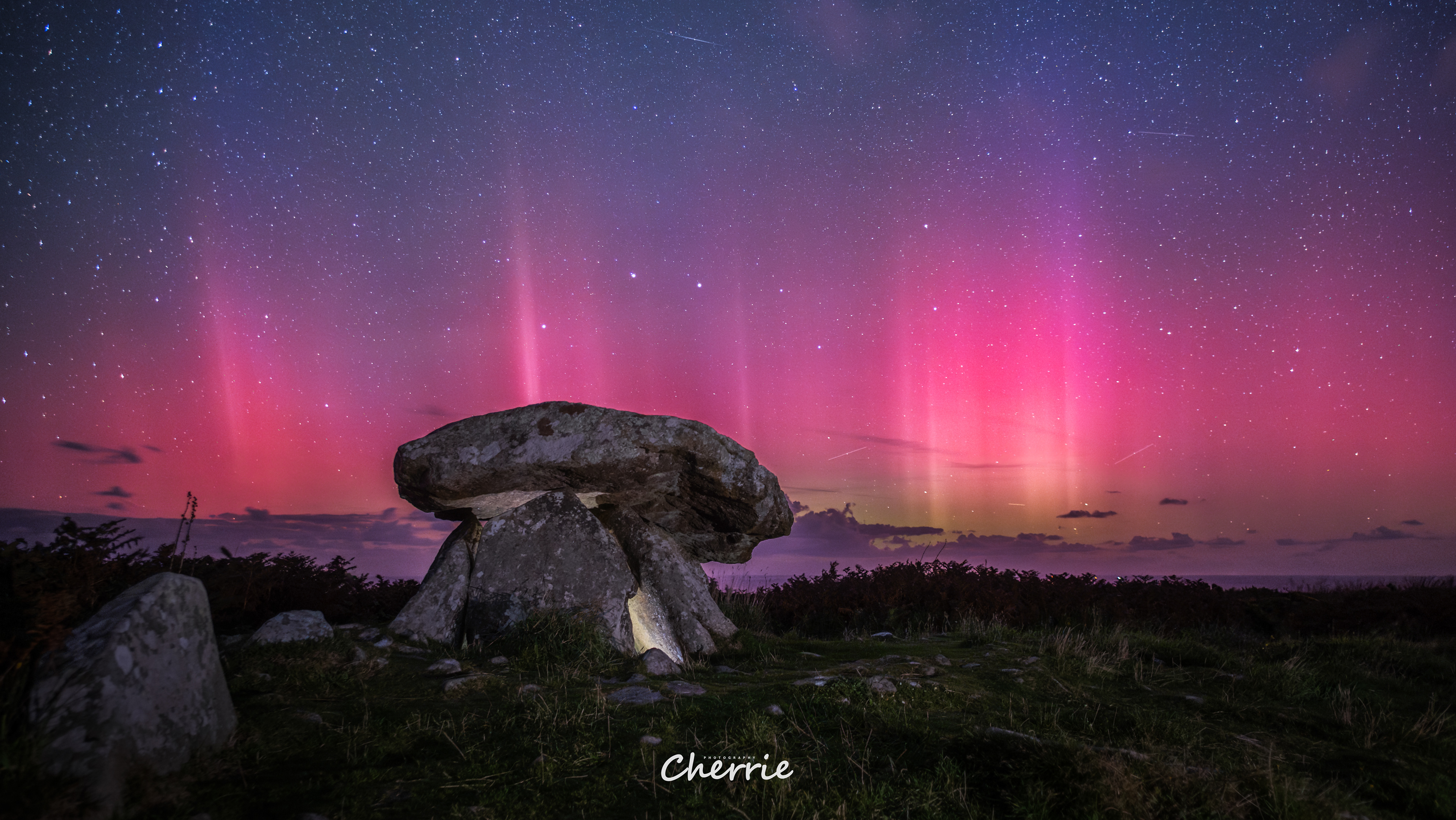
Aurora Borealis In Cornwall's Dark Sky Park West Penwith by Cornwall based Astrophotographer Aaron Cherrie
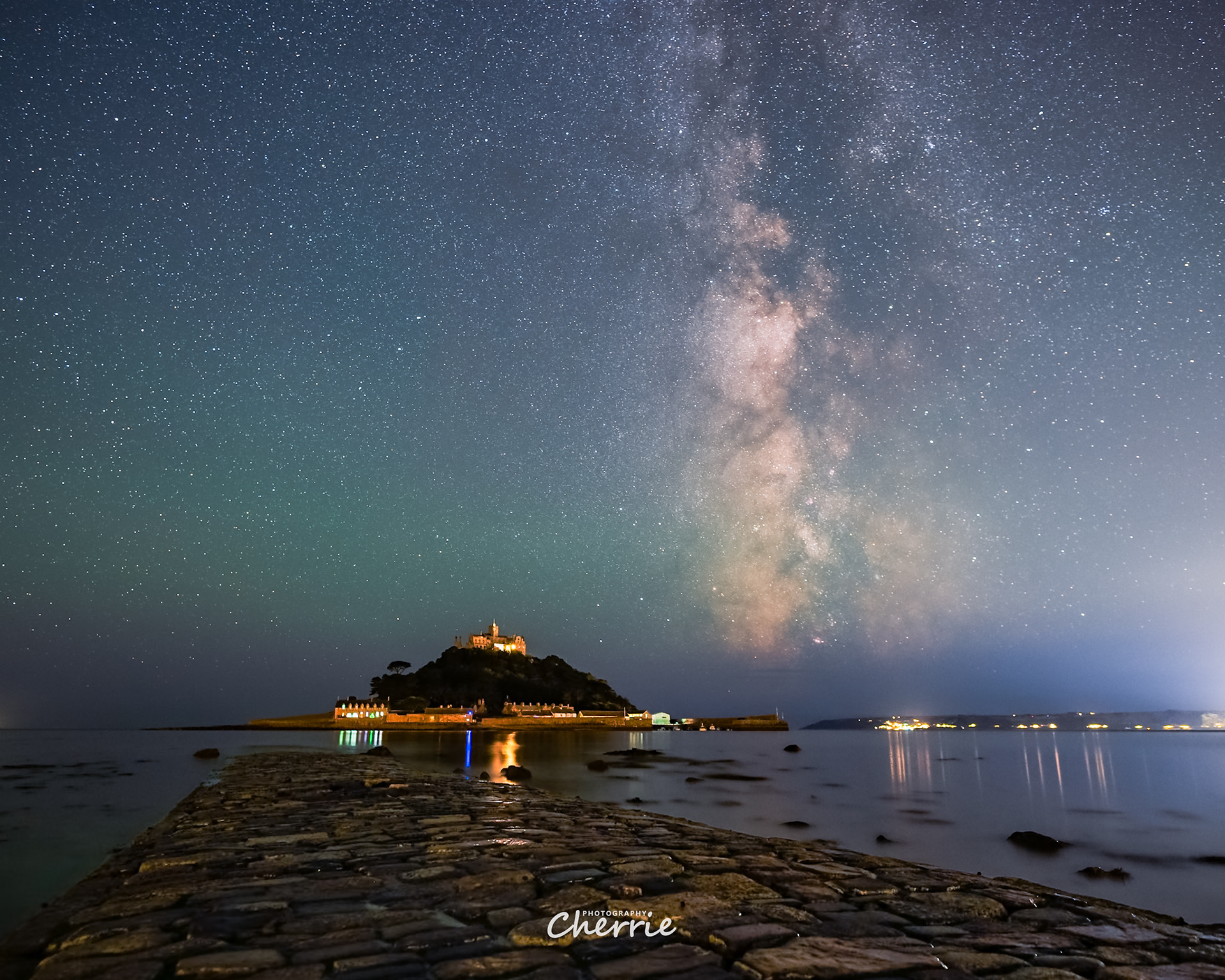
Milky Way photography over St Michaels Mount by Cornwall based Astrophotographer Aaron Cherrie
If you are looking for a Milky Way photographer in Cornwall or want to learn Milky Way photography in one of the UK’s darkest regions, this equipment reflects the professional tools used to capture high-quality night sky imagery along the Cornish coast and countryside.
Visit Go Stargazing, the UK's leading directory for stargazing events.
View the official listing for more details and to see it alongside other dark-sky experiences.
Beginner-Friendly Gear Recommendations
If you're new, skip expensive gear. Start with a basic DSLR or mirrorless camera, wide-angle lens (around 20mm), sturdy tripod, and headtorch to capture Milky Way shots in Cornwall.
Cameras
Any DSLR or mirrorless (APS-C or full-frame) with manual mode and ISO 3200/6400 Brands like Canon, Nikon, Sony, or Fuji all work.
Lenses
(Key Piece) Wide-angle (14–24mm, f/2.8–f/4) for sky + foreground.
Affordable starters
Samyang 14mm f/2.8
Nikon 18–55mm kit (at 18mm, f/3.5)
Sigma 16mm f/1.4 (APS-C mirrorless)
Tripod
(Essential) Must be stable for long exposures—no need for carbon fiber. Beginner picks: Amazon Basics Heavy Duty, Zomei Q666, Neewer aluminum.
Accessories
Red-mode headtorch (preserves night vision)
Spare batteries (exposures drain power)
Lens cloth (fights dew)
Power bank (charges devices)
Dew heater (for humid nights)
Want hands-on help?
Join my Cornwall Astrophotography Workshops I'll guide you using your current gear.